
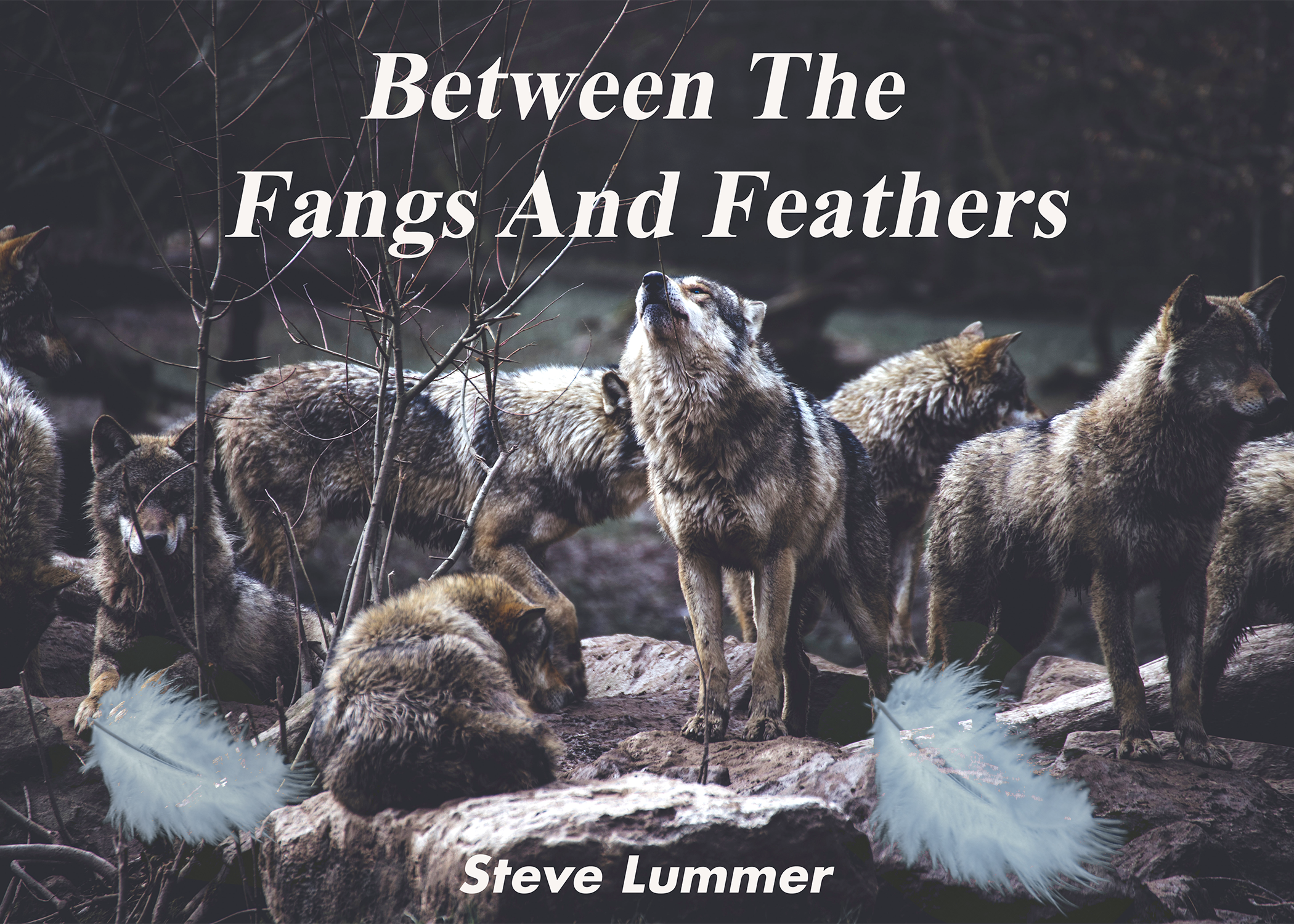
Between Fangs and Feathers
How God uses the wilderness to shape and keep the identity we were meant to have.
By Steve Lummer
“And he was with the wild animals, and the angels were ministering to him.” – Mark 1:13
Not long after Jesus was baptized by John, and not long after he heard his Heavenly Father say, “This is my beloved son, in whom I am well pleased” (Matthew 3:17, NIV), he was tested regarding his identity. Jesus provides a model for finding and keeping our true identity through his wilderness experience. For forty days, Jesus was tempted with the “if you are” challenges from the devil. Matthew, Luke, and Mark record this wilderness experience, where Jesus faced his challenges for forty days and nights.
Mark 1:9-13 (ESV):
In those days Jesus came from Nazareth of Galilee and was baptized by John in the Jordan. And when he came up out of the water, immediately he saw the heavens being torn open and the Spirit descending on him like a dove. And a voice came from heaven, “You are my beloved Son; with you, I am well pleased.” The Spirit immediately drove him out into the wilderness. And he was in the wilderness forty days, being tempted by Satan. He was with the wild animals, and the angels were ministering to him.
Somewhere between the wild animals and the wisp of angels’ wings stood Jesus, alone, for forty days and nights. I like that Jesus spent forty nights of his life out in the wild with wolves. As Mark tells us, he was with the wild beasts.
I remember a vivid black night in the Irish wilderness, staring at the sky at 11:00 p.m. just before bedtime. I let the fire die down and adjusted my eyes to catch a glimpse of the Milky Way—a God-given star show on an Ozark night. But that wasn’t the only gift that dark night offered. As I scanned the horizon across the dark forest, I saw gleaming eyes like live coals. First one pair, then a second, then a third. A circle of narrow eyes surrounded my camp, appearing and disappearing, leaving me shivering in the silence. Wilderness places give us the opportunity to discover the person God created us to be.
We need to intimately know this Jesus who endured the wilderness, for it is the wilderness where we dwell. It’s in this terrain that the Holy Spirit, Satan, wild beasts, and angels all reside together. We can survive such a place only through companionship with the one who knows the way.
Mark, unlike Matthew and Luke, offers no extraneous details about Jesus’s wilderness experience. Instead, Mark presents us with a simple yet powerful image: “The Spirit immediately drove Jesus out into the wilderness. He was in the wilderness for forty days, tempted by Satan. He was with the wild beasts, and angels waited on him.” (Mark 1:12-13)
As I reflect on Mark’s version, three truths stand out:
- Jesus was in the wilderness (Eremos), between the wild beasts and the angels.
What happens to you in the wilderness?
- You find out how weak you are.
- You find out how strong you are.
- You find out who God is.
- You find out who you are.
The wilderness, or Eremos in Greek, can be translated as a desert, deserted place, desolate place, solitary place, lonely place, quiet place, or wilderness. For this reflection, I’ll focus on the Eremos space that Jesus was led to by the Holy Spirit—a place where, as Mark 13 shows, Jesus was between the things of this earth and the things of heaven.
“He was with the wild beasts, and angels waited on him.” – Mark 1:13
Jesus was between the fangs of the wild beasts that could have distracted him and the feathers of the heavenly host that ministered to him. He was literally between the fangs and the feathers. The Celtic Christians have a term for such experiences: “thin places.” These are rare locales where the distance between heaven and earth collapses.
Thin places are locations where the veil between heaven and earth is nearly translucent, offering us glimpses into another realm. This idea often refers to mountaintops or other physical locations, but it also signifies spiritual closeness. When we face trials, eternity feels nearer, and the kingdom becomes more visible if we choose to look closely.
Over the past several years, more articles on thin places have appeared. Eric Weiner’s essay “Where Heaven and Earth Come Closer” in the New York Times (2012) and Oliver Burkeman’s “Where Heaven and Earth Collide” in the Guardian(2014) explore this concept rooted in Celtic spirituality. They describe thin places as locations where we catch glimpses of the divine or the transcendent.
The thin space of the wilderness can confuse and feel like a crisis. We lose our bearings and find new ones—or we don’t. Either way, we are jolted into seeing the world differently. Thin places transform us, unmask us, and help us become our essential selves. In these places, the distractions of daily life are stripped away, revealing who God made us to be.
“And he was with the wild animals, and the angels were ministering to him.” – Mark 1:13
In Matthew’s account of Jesus’ wilderness experience, we see how the wilderness solidified Jesus’ identity and his mission.
Jesus’ identity was questioned and solidified in the wilderness.
I once heard a story of a middle-aged woman who had a heart attack and a near-death experience. Seeing God, she asked, “Is this it?” God replied, “No, you have another 43 years, 2 months, and 8 days to live.” After recovering, she decided to have cosmetic surgeries, figuring she might as well make the most of her extended life. After her final procedure, she was killed by an ambulance. Arriving before God, she asked, “I thought you said I had another 40 years?” God replied, “I didn’t recognize you…”
Most people live their entire lives as strangers to themselves. Don’t let that happen to you. The easiest thing to be is yourself. The hardest thing is trying to be what others want you to be. As John Mason once told me, “Steve, we are all born originals… don’t die a copy.” The wilderness dares us to be who we are meant to be. I believe Jesus’ temptation in the wilderness wasn’t just about turning stones to bread, jumping from a tower, or worshipping the devil. His temptations were about becoming the person his Father needed him to be.
Many Bible scholars suggest that the specific temptations Jesus faced in the wilderness represent three main categories of all human temptation. The apostle John labeled these as “the lust of the flesh, the lust of the eyes, and the pride of life” (1 John 2:16, NIV).
The three tests of Jesus’ identity in Matthew 4:1-11:
- The first test is the test of choosing an identity of self or “the lust of the flesh.”“The tempter came to him and said, ‘If you are the Son of God, tell these stones to become bread.’ Jesus answered, ‘It is written: Man shall not live on bread alone, but on every word that comes from the mouth of God.’” – Matthew 4:3-4
- The second test is the test of choosing an identity of materialism, or the “lust of the eyes.”“Then the devil took him to the holy city and had him stand on the highest point of the temple. ‘If you are the Son of God,’ he said, ‘throw yourself down. For it is written: “He will command his angels concerning you, and they will lift you up in their hands, so that you will not strike your foot against a stone.”’ Jesus answered him, ‘It is also written: Do not put the Lord your God to the test.’” – Matthew 4:5-7
- The third test is the test of choosing an identity of “the pride of life.”“Again, the devil took him to a very high mountain and showed him all the kingdoms of the world and their splendor. ‘All this I will give you,’ he said, ‘if you will bow down and worship me.’ Jesus said to him, ‘Away from me, Satan! For it is written: Worship the Lord your God, and serve him only.’ Then the devil left him, and angels came and attended him.” – Matthew 4:8-11
The wilderness is where we identify who we are and what our mission is.
“And he was with the wild animals, and the angels were ministering to him.” – Mark 1:13
Before beginning his earthly ministry, Jesus needed to know who he was and what his mission for the Father would be. Similarly, before we set out to fulfill God’s assignment for our lives, we must have a firm understanding of our identity and who God has made us to be.
“For we are God’s handiwork, created in Christ Jesus to do good works, which God prepared in advance for us to do.” – Ephesians 2:10 (NIV)
“Each of us is an original.” – Galatians 5:26 (NIV)
Wilderness reveals the original you.
- Wilderness and outdoor classrooms help us recognize defining life moments, both personally and collectively.
A wilderness experience is crucial for encouraging and equipping the saints. A well-organized wilderness classroom opens our eyes in unique and inspiring ways. In the wilderness, we gain the heart to love God and others more deeply. Wilderness also helps us develop the skills needed to impact others with humble confidence. There are many opportunities right outside our doors to engage others with the wonder of God’s creation. With the proper structure, outdoor creation education empowers both teacher and learner in ways often unachievable in traditional classrooms. - Wilderness experiences help you do personal archaeology with fewer distractions.
Wilderness places give us the opportunity to utilize solitude and silence, which in turn provides a setting to minimize life’s distractions and immerse ourselves in God’s presence within His creation. - Wilderness and adventure experiences help you decide to be yourself.
Just as Jesus was tempted to sell out for something less than his Father’s design for his life, we too can discover our unique purpose in wilderness places. The wilderness strips away our false selves and reveals who our Creator designed us to be.
You owe it to God and yourself to be yourself.
“For we are His workmanship, created in Christ Jesus for good works, which God prepared beforehand, that we should walk in them.” – Ephesians 2:10 (NIV)
There has never been and never will be another you. Your wilderness defines you. It shapes you. It helps create you—through pain, hardship, and confusion. It is your wilderness, and no one else’s. Between the wildness of earth and the wisdom of heaven, we discover who we are and what we are here for. When we find our “why” in the wilderness, we will always find our way.
Wilderness, as Michael Easter points out in his book The Comfort Crisis, addresses what he calls “Western laziness”:
“It consists of cramming our lives with compulsive activity, so there is no time to confront the real issues… If we look into our lives, we will see clearly how many unimportant tasks, so-called ‘responsibilities,’ accumulate to fill them up. Going on as we do, obsessively trying to improve our conditions, can become an end in itself and a pointless distraction.”
Michael Easter continues:
“But there are a lot of great pleasures you can get out of the experience of being alone with yourself. In solitude, you can find the unfiltered version of you. People often have breakthroughs where they tap into how they truly feel about a topic and come to some new understanding about themselves. Then you can take your realizations into the social world. Building the capacity to be alone probably makes your interactions with others richer because you’re bringing to the relationship a person who’s actually got stuff going on inside, and isn’t just a connector circuit that only thrives off of others.”
Research backs up solitude’s benefits—it improves productivity, creativity, empathy, and happiness while decreasing self-consciousness.
God uses the wilderness to shape and maintain the identity we were meant to have. Do not lose your God-given identity in this self-important, synthetic, and sensually-driven culture. It’s time to trade in our fleeting worldly identity for one that is eternal. Do not be afraid to place your identity in Him. God is present in your wilderness, and you were made in His image. Quiet yourself in God’s creation.
Or, as Oscar Wilde said: “Be yourself. Everyone else is already taken.”
“And he was with the wild animals, and the angels were ministering to him.” – Mark 1:13
 stevelummer.com