
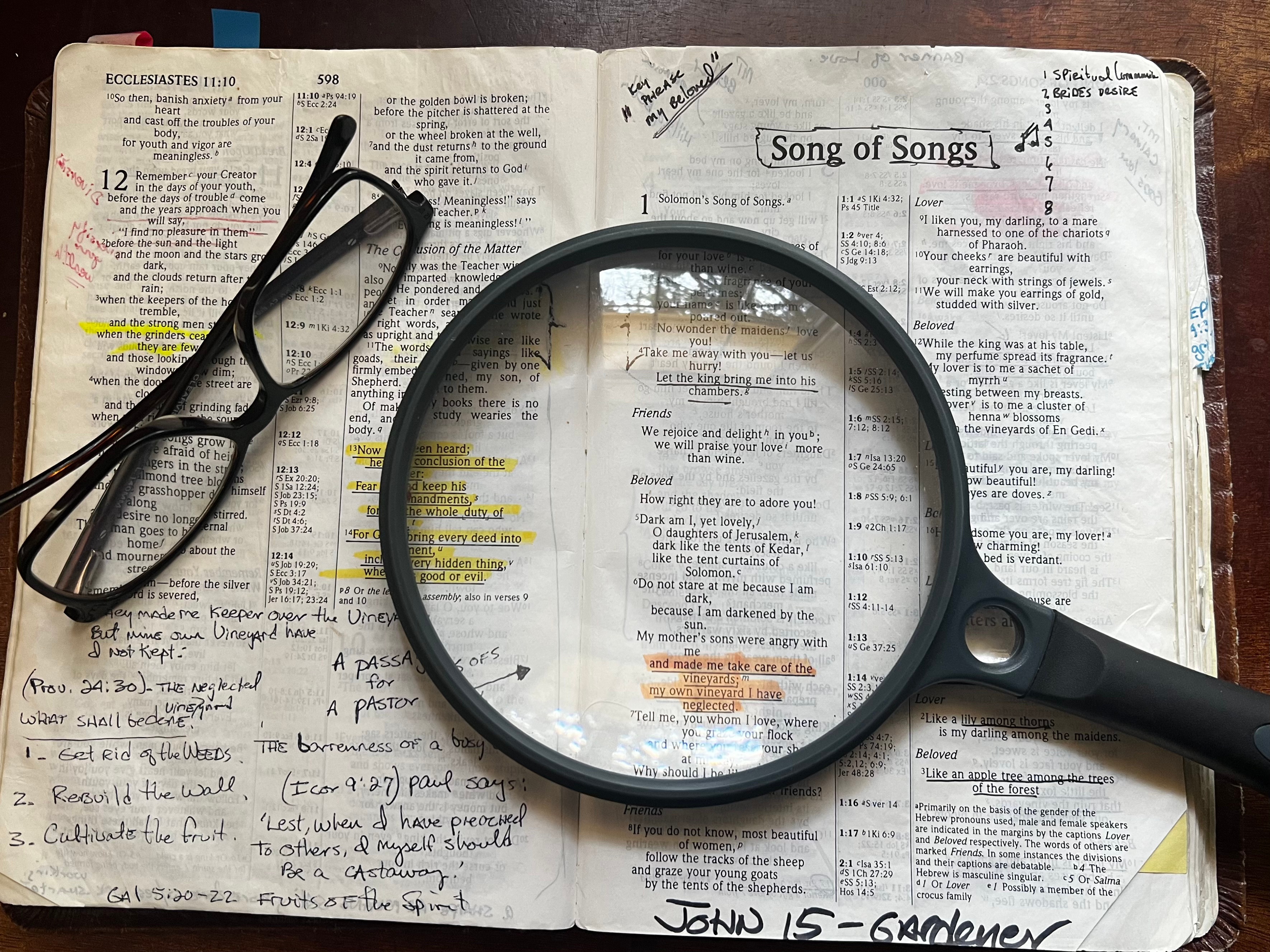
Over the past three years, I have found myself walking through a season I was not fully prepared for—a season marked by the slow grief of aging, the nearness of death, and the painful responsibility of caring for those I deeply love. As I have served my parents and dear relatives in their later years, I have watched strength fade, memories weaken, bodies grow tired, and life begin its quiet return toward the dust. These experiences have not only brought sorrow, but also deep reflection. They have caused me to wrestle honestly with the meaning of old age, the brevity of life, and the hope we are called to hold onto when death draws near.
Because of this, I wanted to turn to Scripture and ask what God says about these difficult but unavoidable realities. The book of Ecclesiastes, especially Ecclesiastes 12:1–7, speaks with a sobering honesty about aging and death. It does not avoid the pain of human frailty, nor does it pretend that life lasts forever. Instead, it calls us to remember our Creator before the difficult days come. This paper that I have submitted for my Masters program at Yellowstone Theological is my attempt to reflect on Ecclesiastes through the lens of my own lived experience, allowing the wisdom of Scripture to speak into the grief, questions, and holy wrestling that come when we stand near the edge of life and eternity.
I hope this helps others who may be wrestling through some of the same questions.
YELLOWSTONE THEOLOGICAL INSTITUTE
Exegetical Paper
Ecclesiastes 12:1-7
A PAPER PRESENTED TO
DR. BRETT DESPER
BY
Steve Lummer
MAY 2026
Remember Your Creator Before You Bite the Dust
An Exegetical Paper on Ecclesiastes 12:1–7
“Remember your Creator in the days of your youth, before the days of trouble come
and the years approach when you will say, “I find no pleasure in them”—
2 before the sun and the light and the moon and the stars grow dark, and the clouds return after
the rain; 3 when the keepers of the house tremble, and the strong men stoop, when the grinders
cease because they are few, and those looking through the windows grow dim;
4 when the doors to the street are closed and the sound of grinding fades; when people rise up at
the sound of birds, but all their songs grow faint; 5 when people are afraid of heights and of
dangers in the streets; when the almond tree blossoms and the grasshopper drags itself along and
desire no longer is stirred. Then people go to their eternal home, and mourners go about the
streets. 6 Remember him—before the silver cord is severed, and the golden bowl is broken;
before the pitcher is shattered at the spring, and the wheel broken at the well,
7 and the dust returns to the ground it came from, and the spirit returns to God who gave it.”
1Ecclesiastes 12:1-7 (NIV) the Holy Bible
Ecclesiastes 12:1–7 is not merely a poem about growing old; it is a sacred
summons to remember the Creator before life’s strength fades. The passage teaches that wisdom
is not found in denying death but in living faithfully before God while breath, strength, and
opportunity remains.
This section of Ecclesiastes is one of the most poetic and practical passages in the Old
Testament. It reads like an old trail guide standing at the edge of the Grand Canyon, pointing
down the path and saying, “Pay attention now, because the trail gets steeper the further down
you go than you think.” The passage urges the reader to “remember your Creator in the days of
your youth” before the “days of trouble” arrive. In a few short verses, the Teacher (Qoheleth,
often translated “the Preacher” or “the Teacher.”) gives us a vivid picture of aging, frailty,
mortality, and the certainty that every human life eventually returns to dust.
This passage is not meant to depress us, it is meant to wake us up. Ecclesiastes 12
does not simply say, “You are going to die.” It says, “Because you are going to die, learn how to
live.” The Teacher wants us to remember God before life becomes tangled in regret, weakness,
fear, and loss. He wants us to build our lives around the Creator before the body begins to break
down, and the opportunities of youth pass away like morning mist in the mountains.
The main idea of Ecclesiastes 12:1–7 is that human beings must remember and honor their
Creator before the decline of old age and the certainty of death reveal how fragile life truly is.
The passage calls for more than mental recollection. To “remember” the Creator is to live in
reality, awareness, humility, worship, obedience, gratitude, and dependence. The Teacher is
calling the young—and really every generation—to live with God in view before the dust
returns to the earth and the spirit returns to the God who gave it.
This paper will examine Ecclesiastes 12:1–7 by considering its literary context, historical
background, key words, imagery, theological message, and personal practical significance.
The passage is a wilderness warning and a gracious invitation. It tells us that life is a gift, youth
is a stewardship, aging is a teacher, death is a boundary, and God is the One who gives meaning
to the whole journey.
Literary and Historical Context
Ecclesiastes belongs to the wisdom literature of the Old Testament. Alongside Job,
Proverbs, and Song of Songs. Ecclesiastes wrestles with the meaning of life under God.
The book is traditionally associated with Solomon because of the opening description: “The
words of the Teacher, son of David, king in Jerusalem” (Eccl. 1:1). Whether Solomon himself
wrote the book directly or whether a later wisdom teacher wrote in a Solomonic tone, the voice
of Ecclesiastes speaks with royal authority, broad experience, and deep reflection.
2“Traditionally Qoheleth has been identified as Solomon.”
According to Tremper Longman, 3the speaker is called Qoheleth, often translated as “the
Teacher” or “the Preacher.” The Hebrew word carries the idea of one who gathers an assembly
or speaks before a gathered people.
Qoheleth is not merely giving private journal reflections. He is addressing the community. He
is calling people to consider the world honestly, without religious phrases and without
pretending life is easier than it is.
One of the key phrases in Ecclesiastes is “under the sun.” This phrase describes life from an
earthly perspective—life observed in the ordinary world of labor, pleasure, injustice, time,
aging, and death. The Teacher looks at everything people chase wisdom, wealth, work,
pleasure, reputation and success. Again and again, he calls these things “vanity” or
“meaningless,” using the Hebrew word hebel. This word does not always mean that life has no
value. It often means that life is vapor-like, temporary, elusive, and impossible to fully control.
4“Ecclesiastes dismantles the proud towers of human certainty.”
Ecclesiastes is not a book of despair. It is a book of stripped-down honesty. It clears away false
hopes so that true wisdom can stand. The Teacher is like a wilderness guide who removes the
unnecessary gear from your pack because he knows the mountain will expose what you are
carrying. Ecclesiastes teaches that if we build life only on what we can see, touch, earn, achieve,
or control, we will eventually discover that everything slips through our fingers. But if we
receive life as a gift from God and live in reverent fear before Him, we can find joy even in a
world marked by mystery and mortality.
The Command to Remember the Creator (vs 1)
Ecclesiastes 12:1 begins, “Remember your Creator in the days of your youth, before the days of
trouble come and the years approach when you will say, ‘I find no pleasure in them.’” The
command is simple, but it is loaded with meaning. To “remember” in Scripture means more than
recalling information. Biblical remembering often involves action, loyalty, and covenant
faithfulness. When God “remembers” His people, He acts on their behalf. When Israel is told to
remember the Lord, they are called to live in obedience and worship.
So when the Teacher says, “Remember your Creator,” he is not saying, “Do not forget that God
exists.” He is saying, “Build your life around the One who made you.” Remembering the
ourselves into existence. We did not breathe life into our own lungs. We are creatures, not
creators. We are stewards, not owners. We are pilgrims, not permanent residents.
The word “Creator” is important. The Teacher does not merely say, “Remember God,” though
that would certainly be true. He says, “Remember your Creator.” This grounds the command in
creation itself. God is the Maker of life, the Giver of breath, the Designer of the human body,
and the One who formed both dust and spirit. This passage begins with the Creator and ends
with the body returning to earth and the spirit returning to God. The structure reminds us that the
whole human story begins and ends in the hands of God.
“Before the Days of Trouble Come” (vs 2)
In light of watching my parents transition from healthy vibrant people to being totally dependent
on others was a reminder of this passage. The first “before” in the passage introduces urgency.
The Teacher says to remember the Creator “before the days of trouble come.” These “days of
trouble” refer to the hardships associated with aging, decline, and approaching death. The
Teacher is realistic. Life is beautiful, but it is also hard. The body is a gift, but it is also
temporary. Strength is real, but it does not last forever.
The phrase “when you will say, ‘I find no pleasure in them’” points to a season when life’s joys
become harder to access. This does not mean old age is only misery. Many older people possess
deep joy, wisdom, peace, and spiritual richness. But Ecclesiastes is naming the honest
difficulties that come with aging. There are seasons when the body hurts, friends are gone,
independence is reduced, and ordinary pleasures are shadowed by limitations.
The Darkening of the Lights (Vs 2)
Ecclesiastes 12:2 continues, “before the sun and the light and the moon and the stars grow dark,
and the clouds return after the rain.” This verse shifts into poetic imagery. The lights of the sky
grow dim. The normal signs of brightness, guidance, beauty, and rhythm begin to fade. The
image may describe the dimming of life’s vitality or even the loss of eyesight. It may also speak
more broadly of the emotional and physical gloom that can accompany aging.
The sun, moon, and stars are creation lights. They mark time and season. They give orientation
to travelers. Anyone who has been out under a desert sky or paddled a river under the stars
knows how much light matters. When the lights grow dark, the world feels different. The path is
harder to see. The horizon disappears. The confidence of movement gives way to caution.
This image is deeply human. It describes the cumulative nature of aging. The Teacher is not
mocking the elderly. He is honoring their struggle. He is saying that a time may come when life
feels like one storm after another. Therefore, remember the Creator before the sky darkens.
The Keepers of the House Tremble (vs 3)
Ecclesiastes 12:3 says, “when the keepers of the house tremble, and the strong men stoop.” The
“house” is likely a metaphor for the human body. The “keepers of the house” may refer to the
arms and hands, which protect, work, hold, build, cook, write, carry, and serve. In old age, these
keepers tremble. Hands that once swung a hammer, gripped handlebars, held children, served
communion, cooked meals, or tied fishing knots may begin to shake.
The “strong men” may refer to the legs, shoulders, or back. They stoop. The body that once
stood tall begins to bend. The posture changes. The stride shortens. Strength gives way to
caution. The uphill climb takes longer than it used to. The pack feels heavier. The trail that once
felt easy now demands attention.
This image is powerful because it recognizes the body as a house. We live in our bodies. We
experience the world through them. We work, worship, love, serve, and adventure through these
physical frames. But the house ages. The beams sag. The walls weaken. The hinges stiffen. The
roof leaks. The body is good, but it is not permanent.
For people of faith, this should not create contempt for the body. Christianity does not teach that
the body is worthless. The body is created by God and will one day be raised. But Ecclesiastes
reminds us that the present body is mortal. It is a tent, not the final home. The trembling of the
keepers is a message preached through flesh: “Remember your Creator.”
The Grinders Cease and the Windows Grow Dim vs 3b)
The verse continues, “when the grinders cease because they are few, and those looking through
the windows grow dim.” The “grinders” almost certainly refer to teeth. In the ancient world,
dental loss was common in old age. The image is domestic and earthy. A household with fewer
grinders produce less. In the same way, a mouth with fewer teeth struggles to chew.
This is wisdom literature, at its most honest truth. It does not speak of aging in abstract terms. It
brings it down to the daily realities of eating, seeing, walking, and hearing. The Teacher says
that remembering the Creator is not just a spiritual idea floating above life. It is connected to the
body at the most ordinary level.
The “windows” likely refer to the eyes. Those who look through the windows grow dim. Sight
fades. The world blurs. Faces become harder to recognize. Words on the page grow smaller.
The trail ahead becomes less clear. The loss of vision is not only physical; it can also symbolize
the narrowing of life’s possibilities.
The Teacher’s imagery is tender but unflinching. He is reminding us that the faculties we often
take for granted are gifts. We usually do not appreciate these gifts until they begin to fail.
The Doors Are Shut and the Sound of Grinding Fades (vs 4)
Ecclesiastes 12:4 says, “when the doors to the street are closed and the sound of grinding fades.”
This may refer to the ears becoming dull or to a person withdrawing from public life. The doors
that once opened outward begin to close. The sounds of daily activity faint.
Aging can bring isolation. The person who once moved easily through the community may
become more homebound. The world outside still moves, but access to it becomes limited. The
sound of grinding—perhaps the sound of millstones and daily labor—fades. Life becomes
quieter, not always by choice.
There is a word of ministry here. Ecclesiastes 12 does not only teach young people to remember
God. It also teaches the community to remember the elderly. When the doors close and the
sounds fade, the people of God should not forget those who are aging.
The verse continues, “when people rise up at the sound of birds, but all their songs grow faint.”
This may describe sleeplessness in old age. The elderly may wake early, even at the sound of
birds. Yet the songs grow faint, possibly meaning hearing loss or the fading of music and joy.
The world is still singing, but the aging person may not hear it as clearly.
This again presses the urgency of the passage. Listen to the birds while you can. Hear the music
of creation while your ears are open. Receive the joy of God’s world while the senses are alive.
Do not wait to worship until the songs grow faint.
Fear of Heights and Danger on the Road (vs 5)
Ecclesiastes 12:5 says, “when people are afraid of heights and of dangers in the streets.” The
boldness of youth gives way to fear and vulnerability. Heights that once thrilled now threaten.
Streets that once seemed ordinary now feel dangerous. Aging can shrink a person’s world not
only because of physical limitation but also because of increased fear.
This is another honest observation. When the body weakens, risks feel different. A fall is no
longer a small accident; it can change everything. A crowded street can feel overwhelming. A
simple outing can require planning, help, and courage. The Teacher understands that aging
affects not only strength but confidence. Aging removes the illusion that we are self-sufficient.
The Almond Tree Blossoms, the Grasshopper Drags, and Desire Fails (vs. 5)
The same verse continues with three memorable images: “when the almond tree blossoms and
the grasshopper drags itself along and desire no longer is stirred.” The almond tree was known
for its white blossoms. Many interpreters see this as a picture of white hair in old age. The head
blossoms like an almond tree. What once was dark becomes white. The body carries the visible
signs of time.
The grasshopper dragging itself along is almost humorous but also sad. A grasshopper is
normally a creature of quick movement and sudden leaps. But here even the grasshopper drags.
This likely pictures the slowing of movement in old age. The spring is gone from the step. The
body that once leaped now shuffles.
These images work together powerfully. The almond tree blossoms above, the grasshopper
drags below, and desire fades within. Aging touches appearance, movement, and inner appetite.
No part of human life remains untouched by time.
Humanity Goes to Its Eternal Home (vs 5b)
Ecclesiastes 12:5 then gives the reason for all this imagery: “Then people go to their eternal
home and mourners go about the streets.” The passage has been moving toward death, and now
death comes into full view. The aging person goes to his “eternal home,” and the mourners
gather.
The mourners in the street remind us that death is both personal and communal. When one
person dies, others grieve. In the ancient world, mourning was often public and visible. The
streets themselves carried the sound of loss. Death interrupts the whole community.
This is important because our modern world often tries to privatize grief. We hide death in
hospitals, funeral homes, and quiet announcements. But Ecclesiastes brings death into the street.
It says, “Look at it. Do not pretend this is not part of life.” Wisdom requires that we face death
honestly.
The Silver Cord, Golden Bowl, Pitcher, and Wheel (vs.6)
Ecclesiastes 12:6 says, “Remember him—before the silver cord is severed, and the golden bowl
is broken; before the pitcher is shattered at the spring, and the wheel broken at the well.” The
command to remember is repeated. This repetition is important. The Teacher circles back to the
main point: remember Him before death comes.
Together, these images suggest the final breakdown of life’s fragile mechanisms. The light goes
out. The water vessel breaks. The wheel stops turning. The household of the body can no longer
function.
The beauty of the images makes the reality more sobering. The cord is silver. The bowl is
golden. Human life is precious. The body is not trash; it is treasure. The tragedy of death is not
that something worthless is discarded, but that something valuable is broken. Ecclesiastes
honors human life by describing it with precious materials.
this passage recognizes that death is now a universal boundary. Everyone’s cord will one day be
severed. Everyone’s bowl will one day break.
The question is whether we have remembered the Creator before that day.
Dust Returns and the Spirit Returns (vs. 7)
Ecclesiastes 12:7 concludes, “and the dust returns to the ground it came from, and the spirit
returns to God who gave it.” This verse echoes Genesis 2:7, where God forms the man from the
dust of the ground and breathes into him the breath of life. Ecclesiastes brings the reader back to
creation. Human beings are dust animated by divine gift. We are earth and breath. We are
material and spiritual. We are lowly and glorious at the same time.
5“death occasion a remarkable distinction between humans and beast. Whereas dust returns to
the earth, human breath ascends to God, who gave it.”
The body returns to the ground. This is not a metaphor only; it is a physical reality. The human
frame, made from the elements of the earth, returns to the earth. Every funeral testifies to this
truth. The strongest body, the most beautiful face, the most disciplined athlete, the hardest
worker, the wealthiest ruler, and the poorest laborer all share the same earthly end.
6The book has some other biblical connections, Ecclesiastes 12:7 also says, “the spirit returns to
God who gave it.” This again connects to Genesis 2:7, where God breathes life into humanity.
The body returns to the earth, but the life-breath belongs to God. This verse reminds the reader
that human life begins with God and ends before God. We are not independent creatures; we are
dependent on the One who gives life, breath, and meaning.
But the spirit returns to God who gave it. Life is not self-originating. The breath within us is
entrusted by God. At death, the gift returns to the Giver. This does not answer every question
about the intermediate state or the final resurrection, but it clearly places human destiny in
God’s hands.
7“Ecclesiastes as wisdom literature that resists easy answers and forces the reader to live
faithfully within mystery. In this way, Ecclesiastes 12 teaches that wisdom is not denial of death
but faithful living in light of death.”
Practical Application
The application is for the young: do not waste your youth. Youth is not just a time for self-
expression; it is a time for spiritual formation. Remember God while your mind is sharp, your
body is strong, your options are many, and your habits are still being shaped. Give God more
than the leftovers of your life. Give Him your first strength.
Ecclesiastes 12:1–7 is no longer just ancient poetry to me; it has become deeply personal. Over
the past three years, while serving as trustee and power of attorney for my mom, dad, and Aunts
estate, I have watched people I love move from strength and vitality into the difficult realities of
aging. Their slowing steps and weakening bodies have become a living reminder of Solomon’s
words. Ecclesiastes 12 speaks honestly and tenderly about life’s fading strength, calling us to
“remember our Creator” before the difficult days come.
Today, at 68, I would tell my 17-year-old self: Remember your Creator while your legs are
strong, your eyes are clear, and your dreams are still running wild—because one day the trail
will slow, but the One who called you will still be faithful.
Conclusion
8“There is nothing pleasant about old age and death, regardless of how one approaches this
text.”
Ecclesiastes 12:1–7 is a holy wake-up call. It tells us to remember our Creator before the days of
trouble come. It paints the aging body with unforgettable images: trembling keepers, stooping
strong men, few grinders, dim windows, closed doors, faint songs, fear of heights, blossoming
almond trees, dragging grasshoppers, broken bowls, shattered pitchers, and dust returning to
earth.
The passage is beautiful because it is honest. It does not flatter youth or deny aging. It does not
hide death or exaggerate human strength. It simply tells the truth: life is a gift from the Creator,
and that gift must be received with reverence before it passes.
To me, Ecclesiastes 12 feels like a word spoken around a late-night campfire after a long day on
the trail. The flames are low. The stars are bright. The old guide leans forward and says, don’t
wait until your legs are gone to choose the right trail. Don’t wait until the light fades to look for
the One who made the sun. Don’t wait until the dust settles to remember where your breath
came from.
The Creator is not only waiting at the end of the trail. He is the One who has been walking with
us from the beginning.
Bibliography
Crenshaw, James L. Old Testament: An Introduction. 3rd ed. Louisville: Westminster John Knox Press, 2010.
Crenshaw, James L. “Youth and Old Age in Qoheleth.” Hebrew Annual Review 10 (1986): 1–12.
Fox, Michael V. A Time to Tear Down and a Time to Build Up: A Rereading of Ecclesiastes. Grand Rapids: Eerdmans, 1999.
Longman III, Tremper. The Book of Ecclesiastes. New International Commentary on the Old Testament. Grand Rapids: Eerdmans, 1998.
Seow, Choon-Leong. Ecclesiastes: A New Translation with Introduction and Commentary. Anchor Bible 18C. New York: Doubleday, 1997.
Zondervan Academic. “Who Wrote Ecclesiastes and What Does It Mean?” October 21, 2017.
The Holy Bible, New International Version. Grand Rapids: Zondervan, 2011.

