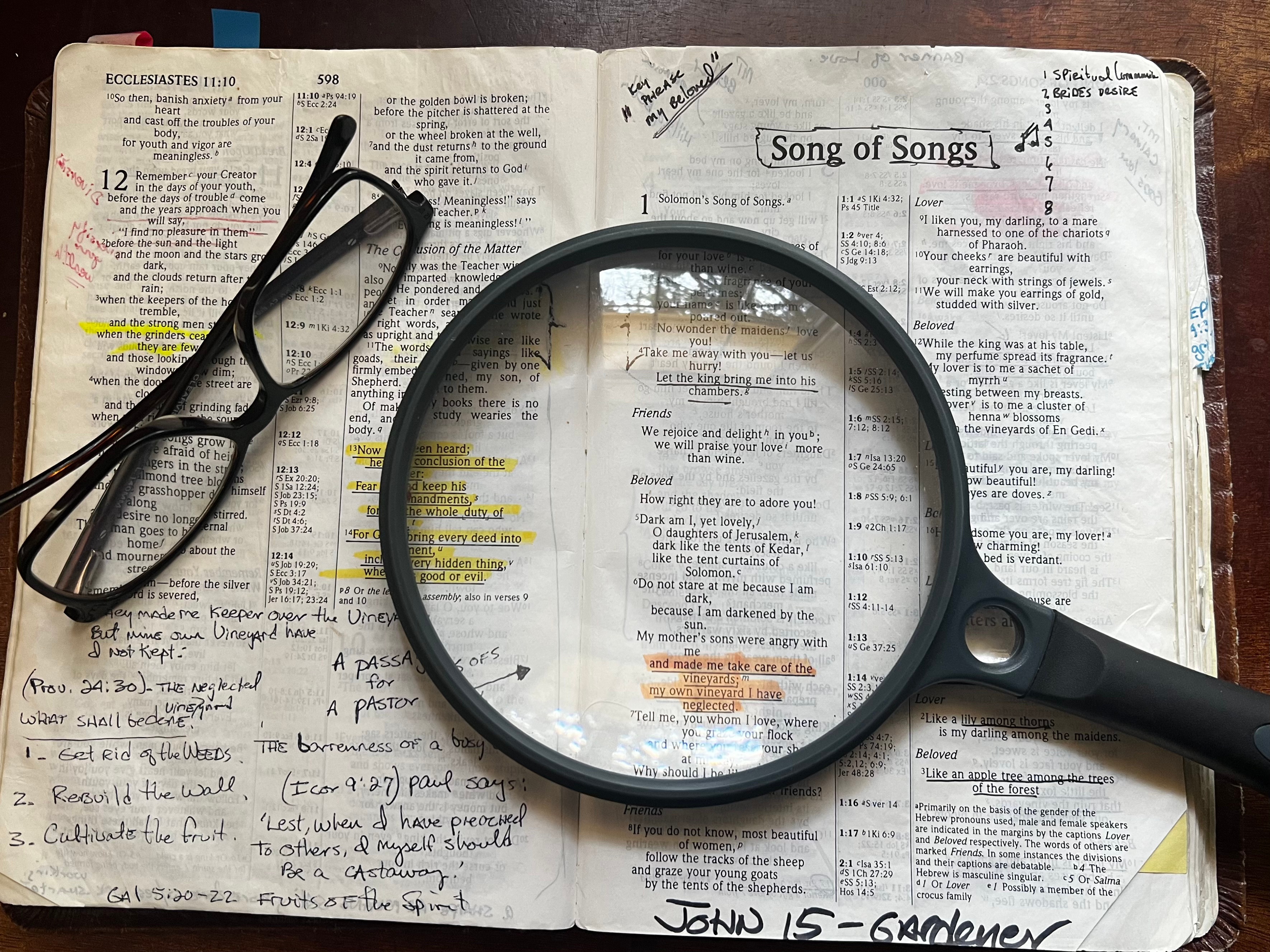
Books I'm Reading, Old age and Death, Yellowstone Theological Adventure Studies

Remember Your Creator Before You Bite the Dust 

Over the past three years, I have found myself walking through a season I was not fully prepared for—a season marked by the slow grief of aging, the nearness of death, and the painful responsibility of caring for those I deeply love. As I have served my parents and dear relatives in their later years, I have watched strength fade, memories weaken, bodies grow tired, and life begin its quiet return toward the dust. These experiences have not only brought sorrow, but also deep reflection. They have caused me to wrestle honestly with the meaning of old age, the brevity of life, and the hope we are called to hold onto when death draws near.

Because of this, I wanted to turn to Scripture and ask what God says about these difficult but unavoidable realities. The book of Ecclesiastes, especially Ecclesiastes 12:1–7, speaks with a sobering honesty about aging and death. It does not avoid the pain of human frailty, nor does it pretend that life lasts forever. Instead, it calls us to remember our Creator before the difficult days come. This paper that I have submitted for my Masters program at Yellowstone Theological is my attempt to reflect on Ecclesiastes through the lens of my own lived experience, allowing the wisdom of Scripture to speak into the grief, questions, and holy wrestling that come when we stand near the edge of life and eternity.

I hope this helps others who may be wrestling through some of the same questions.

YELLOWSTONE THEOLOGICAL INSTITUTE 

Exegetical Paper 

 Ecclesiastes 12:1-7 

A PAPER PRESENTED TO 

DR. BRETT DESPER 

BY  

Steve Lummer 

MAY 2026 
 

                         Remember Your Creator Before You Bite the Dust 

                    An Exegetical Paper on Ecclesiastes 12:1–7 

                “Remember your Creator in the days of your youth, before the days of trouble come 

 and the years approach when you will say, “I find no pleasure in them”— 

before the sun and the light and the moon and the stars grow dark, and the clouds return after  

the rain; when the keepers of the house tremble, and the strong men stoop, when the grinders  

cease because they are few, and those looking through the windows grow dim; 

when the doors to the street are closed and the sound of grinding fades; when people rise up at  

the sound of birds, but all their songs grow faint; 5 when people are afraid of heights and of  

dangers in the streets; when the almond tree blossoms and the grasshopper drags itself along and 

desire no longer is stirred. Then people go to their eternal home, and mourners go about the  

streets. Remember him—before the silver cord is severed, and the golden bowl is broken;  

before the pitcher is shattered at the spring, and the wheel broken at the well, 

and the dust returns to the ground it came from, and the spirit returns to God who gave it.”  

1Ecclesiastes 12:1-7 (NIV) the Holy Bible 

                        Ecclesiastes 12:1–7 is not merely a poem about growing old; it is a sacred 

summons to remember the Creator before life’s strength fades. The passage teaches that wisdom 

is not found in denying death but in living faithfully before God while breath, strength, and 

 opportunity remains. 

This section of Ecclesiastes is one of the most poetic and practical passages in the Old  

Testament. It reads like an old trail guide standing at the edge of the Grand Canyon, pointing  

down the path and saying, “Pay attention now, because the trail gets steeper the further down 

you go than you think.” The passage urges the reader to “remember your Creator in the days of 

your youth” before the “days of trouble” arrive. In a few short verses, the Teacher (Qoheleth,  

often translated “the Preacher” or “the Teacher.”) gives us a vivid picture of aging, frailty,  

mortality, and the certainty that every human life eventually returns to dust. 

This passage is not meant to depress us, it is meant to wake us up.  Ecclesiastes 12 

does not simply say, “You are going to die.” It says, “Because you are going to die, learn how to  

live.” The Teacher wants us to remember God before life becomes tangled in regret, weakness,  

fear, and loss. He wants us to build our lives around the Creator before the body begins to break  

down, and the opportunities of youth pass away like morning mist in the mountains. 

The main idea of Ecclesiastes 12:1–7 is that human beings must remember and honor their  

Creator before the decline of old age and the certainty of death reveal how fragile life truly is.  

The passage calls for more than mental recollection. To “remember” the Creator is to live in  

reality, awareness, humility, worship, obedience, gratitude, and dependence. The Teacher is 

calling the young—and really every generation—to live with God in view before the dust 

 returns to the earth and the spirit returns to the God who gave it. 

This paper will examine Ecclesiastes 12:1–7 by considering its literary context, historical 

background, key words, imagery, theological message, and personal practical significance.  

The passage is a wilderness warning and a gracious invitation. It tells us that life is a gift, youth  

is a stewardship, aging is a teacher, death is a boundary, and God is the One who gives meaning  

to the whole journey. 

Literary and Historical Context 

               Ecclesiastes belongs to the wisdom literature of the Old Testament. Alongside Job, 

Proverbs, and Song of Songs. Ecclesiastes wrestles with the meaning of life under God. 

The book is traditionally associated with Solomon because of the opening description: “The 

words of the Teacher, son of David, king in Jerusalem” (Eccl. 1:1). Whether Solomon himself 

wrote the book directly or whether a later wisdom teacher wrote in a Solomonic tone, the voice 

of Ecclesiastes speaks with royal authority, broad experience, and deep reflection. 

2“Traditionally Qoheleth has been identified as Solomon.” 

According to Tremper Longman, 3the speaker is called Qoheleth, often translated as “the  

Teacher” or “the Preacher.” The Hebrew word carries the idea of one who gathers an assembly 

 or speaks before a gathered people.  

Qoheleth is not merely giving private journal reflections. He is addressing the community. He  

is calling people to consider the world honestly, without religious phrases and without  

pretending life is easier than it is. 

One of the key phrases in Ecclesiastes is “under the sun.” This phrase describes life from an 

earthly perspective—life observed in the ordinary world of labor, pleasure, injustice, time,  

aging, and death. The Teacher looks at everything people chase wisdom, wealth, work,  

pleasure, reputation and success. Again and again, he calls these things “vanity” or  

“meaningless,” using the Hebrew word hebel. This word does not always mean that life has no  

value. It often means that life is vapor-like, temporary, elusive, and impossible to fully control. 

4“Ecclesiastes dismantles the proud towers of human certainty.” 

Ecclesiastes is not a book of despair. It is a book of stripped-down honesty. It clears away false 

hopes so that true wisdom can stand. The Teacher is like a wilderness guide who removes the 

unnecessary gear from your pack because he knows the mountain will expose what you are 

carrying. Ecclesiastes teaches that if we build life only on what we can see, touch, earn, achieve, 

or control, we will eventually discover that everything slips through our fingers. But if we 

receive life as a gift from God and live in reverent fear before Him, we can find joy even in a  

world marked by mystery and mortality. 

The Command to Remember the Creator (vs 1) 

Ecclesiastes 12:1 begins, “Remember your Creator in the days of your youth, before the days of 

trouble come and the years approach when you will say, ‘I find no pleasure in them.’” The 

command is simple, but it is loaded with meaning. To “remember” in Scripture means more than 

recalling information. Biblical remembering often involves action, loyalty, and covenant  

faithfulness. When God “remembers” His people, He acts on their behalf. When Israel is told to  

remember the Lord, they are called to live in obedience and worship. 

So when the Teacher says, “Remember your Creator,” he is not saying, “Do not forget that God  

exists.” He is saying, “Build your life around the One who made you.” Remembering the  

ourselves into existence. We did not breathe life into our own lungs. We are creatures, not  

creators. We are stewards, not owners. We are pilgrims, not permanent residents. 

The word “Creator” is important. The Teacher does not merely say, “Remember God,” though  

that would certainly be true. He says, “Remember your Creator.” This grounds the command in  

creation itself. God is the Maker of life, the Giver of breath, the Designer of the human body,  

and the One who formed both dust and spirit. This passage begins with the Creator and ends  

with the body returning to earth and the spirit returning to God. The structure reminds us that the 

whole human story begins and ends in the hands of God. 

“Before the Days of Trouble Come” (vs 2) 

In light of watching my parents transition from healthy vibrant people to being totally dependent 

on others was a reminder of this passage. The first “before” in the passage introduces urgency.  

The Teacher says to remember the Creator “before the days of trouble come.” These “days of  

trouble” refer to the hardships associated with aging, decline, and approaching death. The  

Teacher is realistic. Life is beautiful, but it is also hard. The body is a gift, but it is also  

temporary. Strength is real, but it does not last forever. 

The phrase “when you will say, ‘I find no pleasure in them’” points to a season when life’s joys  

become harder to access. This does not mean old age is only misery. Many older people possess  

deep joy, wisdom, peace, and spiritual richness. But Ecclesiastes is naming the honest  

difficulties that come with aging. There are seasons when the body hurts, friends are gone,  

independence is reduced, and ordinary pleasures are shadowed by limitations. 

The Darkening of the Lights (Vs 2) 

Ecclesiastes 12:2 continues, “before the sun and the light and the moon and the stars grow dark, 

and the clouds return after the rain.” This verse shifts into poetic imagery. The lights of the sky  

grow dim. The normal signs of brightness, guidance, beauty, and rhythm begin to fade. The  

image may describe the dimming of life’s vitality or even the loss of eyesight. It may also speak  

more broadly of the emotional and physical gloom that can accompany aging. 

The sun, moon, and stars are creation lights. They mark time and season. They give orientation  

to travelers. Anyone who has been out under a desert sky or paddled a river under the stars  

knows how much light matters. When the lights grow dark, the world feels different. The path is 

harder to see. The horizon disappears. The confidence of movement gives way to caution. 

This image is deeply human. It describes the cumulative nature of aging. The Teacher is not 

mocking the elderly. He is honoring their struggle. He is saying that a time may come when life 

feels like one storm after another. Therefore, remember the Creator before the sky darkens. 

The Keepers of the House Tremble (vs 3) 

Ecclesiastes 12:3 says, “when the keepers of the house tremble, and the strong men stoop.” The 

 “house” is likely a metaphor for the human body. The “keepers of the house” may refer to the  

arms and hands, which protect, work, hold, build, cook, write, carry, and serve. In old age, these  

keepers tremble. Hands that once swung a hammer, gripped handlebars, held children, served  

communion, cooked meals, or tied fishing knots may begin to shake. 

The “strong men” may refer to the legs, shoulders, or back. They stoop. The body that once  

stood tall begins to bend. The posture changes. The stride shortens. Strength gives way to  

caution. The uphill climb takes longer than it used to. The pack feels heavier. The trail that once  

felt easy now demands attention. 

This image is powerful because it recognizes the body as a house. We live in our bodies. We  

experience the world through them. We work, worship, love, serve, and adventure through these  

physical frames. But the house ages. The beams sag. The walls weaken. The hinges stiffen. The  

roof leaks. The body is good, but it is not permanent. 

For people of faith, this should not create contempt for the body. Christianity does not teach that  

the body is worthless. The body is created by God and will one day be raised. But Ecclesiastes  

reminds us that the present body is mortal. It is a tent, not the final home. The trembling of the  

keepers is a message preached through flesh: “Remember your Creator.” 

The Grinders Cease and the Windows Grow Dim vs 3b) 

The verse continues, “when the grinders cease because they are few, and those looking through  

the windows grow dim.” The “grinders” almost certainly refer to teeth. In the ancient world,  

dental loss was common in old age. The image is domestic and earthy. A household with fewer  

grinders produce less. In the same way, a mouth with fewer teeth struggles to chew. 

This is wisdom literature, at its most honest truth. It does not speak of aging in abstract terms. It  

brings it down to the daily realities of eating, seeing, walking, and hearing. The Teacher says  

that remembering the Creator is not just a spiritual idea floating above life. It is connected to the  

body at the most ordinary level. 

The “windows” likely refer to the eyes. Those who look through the windows grow dim. Sight  

fades. The world blurs. Faces become harder to recognize. Words on the page grow smaller.  

The trail ahead becomes less clear. The loss of vision is not only physical; it can also symbolize  

the narrowing of life’s possibilities. 

The Teacher’s imagery is tender but unflinching. He is reminding us that the faculties we often 

take for granted are gifts.  We usually do not appreciate these gifts until they begin to fail. 

The Doors Are Shut and the Sound of Grinding Fades (vs 4) 

Ecclesiastes 12:4 says, “when the doors to the street are closed and the sound of grinding fades.” 

This may refer to the ears becoming dull or to a person withdrawing from public life. The doors 

that once opened outward begin to close. The sounds of daily activity faint.  

Aging can bring isolation. The person who once moved easily through the community may  

become more homebound. The world outside still moves, but access to it becomes limited. The  

sound of grinding—perhaps the sound of millstones and daily labor—fades. Life becomes  

quieter, not always by choice. 

There is a word of ministry here. Ecclesiastes 12 does not only teach young people to remember  

God. It also teaches the community to remember the elderly. When the doors close and the  

sounds fade, the people of God should not forget those who are aging.  

The verse continues, “when people rise up at the sound of birds, but all their songs grow faint.”  

This may describe sleeplessness in old age. The elderly may wake early, even at the sound of  

birds. Yet the songs grow faint, possibly meaning hearing loss or the fading of music and joy.  

The world is still singing, but the aging person may not hear it as clearly. 

This again presses the urgency of the passage. Listen to the birds while you can. Hear the music  

of creation while your ears are open. Receive the joy of God’s world while the senses are alive.  

Do not wait to worship until the songs grow faint. 

Fear of Heights and Danger on the Road (vs 5) 

Ecclesiastes 12:5 says, “when people are afraid of heights and of dangers in the streets.” The  

boldness of youth gives way to fear and vulnerability. Heights that once thrilled now threaten.  

Streets that once seemed ordinary now feel dangerous. Aging can shrink a person’s world not  

only because of physical limitation but also because of increased fear. 

This is another honest observation. When the body weakens, risks feel different. A fall is no  

longer a small accident; it can change everything. A crowded street can feel overwhelming. A  

simple outing can require planning, help, and courage. The Teacher understands that aging  

affects not only strength but confidence. Aging removes the illusion that we are self-sufficient. 

The Almond Tree Blossoms, the Grasshopper Drags, and Desire Fails (vs. 5) 

The same verse continues with three memorable images: “when the almond tree blossoms and  

the grasshopper drags itself along and desire no longer is stirred.” The almond tree was known  

for its white blossoms. Many interpreters see this as a picture of white hair in old age. The head  

blossoms like an almond tree. What once was dark becomes white. The body carries the visible  

signs of time. 

The grasshopper dragging itself along is almost humorous but also sad. A grasshopper is  

normally a creature of quick movement and sudden leaps. But here even the grasshopper drags.  

This likely pictures the slowing of movement in old age. The spring is gone from the step. The  

body that once leaped now shuffles. 

These images work together powerfully. The almond tree blossoms above, the grasshopper 

drags below, and desire fades within. Aging touches appearance, movement, and inner appetite.  

No part of human life remains untouched by time. 

Humanity Goes to Its Eternal Home (vs 5b) 

Ecclesiastes 12:5 then gives the reason for all this imagery: “Then people go to their eternal  

home and mourners go about the streets.” The passage has been moving toward death, and now  

death comes into full view. The aging person goes to his “eternal home,” and the mourners  

gather. 

The mourners in the street remind us that death is both personal and communal. When one 

person dies, others grieve. In the ancient world, mourning was often public and visible. The  

streets themselves carried the sound of loss. Death interrupts the whole community. 

This is important because our modern world often tries to privatize grief. We hide death in  

hospitals, funeral homes, and quiet announcements. But Ecclesiastes brings death into the street. 

It says, “Look at it. Do not pretend this is not part of life.” Wisdom requires that we face death  

honestly. 

The Silver Cord, Golden Bowl, Pitcher, and Wheel (vs.6) 

Ecclesiastes 12:6 says, “Remember him—before the silver cord is severed, and the golden bowl  

is broken; before the pitcher is shattered at the spring, and the wheel broken at the well.” The  

command to remember is repeated. This repetition is important. The Teacher circles back to the  

main point: remember Him before death comes. 

Together, these images suggest the final breakdown of life’s fragile mechanisms. The light goes  

out. The water vessel breaks. The wheel stops turning. The household of the body can no longer  

function. 

The beauty of the images makes the reality more sobering. The cord is silver. The bowl is  

golden. Human life is precious. The body is not trash; it is treasure. The tragedy of death is not  

that something worthless is discarded, but that something valuable is broken. Ecclesiastes  

honors human life by describing it with precious materials. 

this passage recognizes that death is now a universal boundary. Everyone’s cord will one day be  

severed. Everyone’s bowl will one day break. 

The question is whether we have remembered the Creator before that day. 

Dust Returns and the Spirit Returns (vs. 7) 

Ecclesiastes 12:7 concludes, “and the dust returns to the ground it came from, and the spirit 

returns to God who gave it.” This verse echoes Genesis 2:7, where God forms the man from the  

dust of the ground and breathes into him the breath of life. Ecclesiastes brings the reader back to 

creation. Human beings are dust animated by divine gift. We are earth and breath. We are  

material and spiritual. We are lowly and glorious at the same time. 

5“death occasion a remarkable distinction between humans and beast. Whereas dust returns to  

the earth, human breath ascends to God, who gave it.”  

The body returns to the ground. This is not a metaphor only; it is a physical reality. The human  

frame, made from the elements of the earth, returns to the earth. Every funeral testifies to this  

truth. The strongest body, the most beautiful face, the most disciplined athlete, the hardest  

worker, the wealthiest ruler, and the poorest laborer all share the same earthly end. 

6The book has some other biblical connections, Ecclesiastes 12:7 also says, “the spirit returns to  

God who gave it.” This again connects to Genesis 2:7, where God breathes life into humanity.  

The body returns to the earth, but the life-breath belongs to God. This verse reminds the reader  

that human life begins with God and ends before God. We are not independent creatures; we are  

dependent on the One who gives life, breath, and meaning. 

But the spirit returns to God who gave it. Life is not self-originating. The breath within us is  

entrusted by God. At death, the gift returns to the Giver. This does not answer every question  

about the intermediate state or the final resurrection, but it clearly places human destiny in  

God’s hands. 

7“Ecclesiastes as wisdom literature that resists easy answers and forces the reader to live 

faithfully within mystery. In this way, Ecclesiastes 12 teaches that wisdom is not denial of death  

but faithful living in light of death.” 

Practical Application 

The application is for the young: do not waste your youth. Youth is not just a time for self- 

expression; it is a time for spiritual formation. Remember God while your mind is sharp, your  

body is strong, your options are many, and your habits are still being shaped. Give God more  

than the leftovers of your life. Give Him your first strength. 

Ecclesiastes 12:1–7 is no longer just ancient poetry to me; it has become deeply personal. Over  

the past three years, while serving as trustee and power of attorney for my mom, dad, and Aunts  

estate, I have watched people I love move from strength and vitality into the difficult realities of  

aging. Their slowing steps and weakening bodies have become a living reminder of Solomon’s  

words. Ecclesiastes 12 speaks honestly and tenderly about life’s fading strength, calling us to  

“remember our Creator” before the difficult days come. 

Today, at 68, I would tell my 17-year-old self: Remember your Creator while your legs are  

strong, your eyes are clear, and your dreams are still running wild—because one day the trail  

will slow, but the One who called you will still be faithful. 

Conclusion 

8“There is nothing pleasant about old age and death, regardless of how one approaches this  

text.” 

Ecclesiastes 12:1–7 is a holy wake-up call. It tells us to remember our Creator before the days of 

trouble come. It paints the aging body with unforgettable images: trembling keepers, stooping  

strong men, few grinders, dim windows, closed doors, faint songs, fear of heights, blossoming  

almond trees, dragging grasshoppers, broken bowls, shattered pitchers, and dust returning to  

earth. 

The passage is beautiful because it is honest. It does not flatter youth or deny aging. It does not  

hide death or exaggerate human strength. It simply tells the truth: life is a gift from the Creator,  

and that gift must be received with reverence before it passes. 

To me, Ecclesiastes 12 feels like a word spoken around a late-night campfire after a long day on  

the trail. The flames are low. The stars are bright. The old guide leans forward and says, don’t  

wait until your legs are gone to choose the right trail. Don’t wait until the light fades to look for  

the One who made the sun. Don’t wait until the dust settles to remember where your breath  

came from. 

The Creator is not only waiting at the end of the trail. He is the One who has been walking with  

us from the beginning. 


Bibliography 

Crenshaw, James L. Old Testament: An Introduction. 3rd ed. Louisville: Westminster John Knox Press, 2010. 

Crenshaw, James L. “Youth and Old Age in Qoheleth.” Hebrew Annual Review 10 (1986): 1–12. 

Fox, Michael V. A Time to Tear Down and a Time to Build Up: A Rereading of Ecclesiastes. Grand Rapids: Eerdmans, 1999. 

Longman III, Tremper. The Book of Ecclesiastes. New International Commentary on the Old Testament. Grand Rapids: Eerdmans, 1998. 

Seow, Choon-Leong. Ecclesiastes: A New Translation with Introduction and Commentary. Anchor Bible 18C. New York: Doubleday, 1997. 

Zondervan Academic. “Who Wrote Ecclesiastes and What Does It Mean?” October 21, 2017. 

The Holy Bible, New International Version. Grand Rapids: Zondervan, 2011. 

Standard
Books I'm Reading

21.4-mile Back Country Adventure in Yellowstone National Park

Backcountry Kayaking Adventure in Yellowstone

This September, I joined the Yellowstone Theological Institute for a three-day,

two-night backcountry camping expedition deep in Yellowstone National Park.

Our journey began on the calm waters of Lewis Lake, where we packed our kayaks

with all the gear and provisions, we would need for the days ahead.

On the first day, we paddled 6.87 miles across the beautiful Lewis Lake and as far

as we could up the Lewis River until the water level forced us to climb out of our

boats and line our kayaks by foot. The transition from open lake to quiet river felt

like crossing into a more secret part of the park—remote, wild, and still.

As the river widened again, we emerged onto the vast expanse of Shoshone Lake,

one of the largest backcountry lakes in the continental United States. Accessible

only by foot or paddle, it felt entirely untouched. The stillness of the water

mirrored the endless sky, broken only by the dip of paddles and the occasional call

of a duck or bird that calls Yellowstone home.

After more than six hours of moving across the lake and up the river, we set up a

welcomed and comfortable camp for the night. We cooked simple meals over

backpacking stoves and shared stories under a canopy of stars.

Over the course of our three days, we explored the hidden corners of the lake,

hiked short trails along the shore, and enjoyed moments of solitude and reflection

that are rare in daily life. On the final day, we retraced our route back through the

Lewis River and across Lewis Lake, our kayaks gliding easily now with the current

and wind at our backs.

This journey was both a physical adventure and a spiritual retreat—an

unforgettable experience of community, wonder, and renewal in one of the most

wild and beautiful places in Yellowstone.

Finding God in the Stillness of Backcountry Kayaking

As I paddled deep into the backcountry, away from the noise and rush of everyday

life, something sacred happened. The still waters, the towering trees reflected like a

painting on the surface, and the distant call of a loon created a cathedral far greaterthan anything built by human hands. Out there, in the quiet, my heart became still

enough to hear God’s whisper.

Backcountry kayaking strips away distractions. Each stroke of the paddle is simple

and purposeful—a rhythm that clears my mind and makes room for prayer. I find

myself talking to God not with rehearsed words, but with an open heart—thanking

Him for the sunrise, for the breeze on my face, for the gift of being alive and

present in this moment. The solitude allows me to be fully attentive to His

presence, reminding me that He is not distant, but as close as the water beneath my

kayak.

Out on the water, I saw creation as God intended it—untouched, wild, and

breathtaking. The beauty and complexity of nature reflect His creativity and care,

and I am reminded that the same God who carved these shorelines and painted

these skies also shaped me. Being surrounded by such majesty fills me with awe

and deepens my trust in His power and goodness.

This backcountry kayaking adventure renewed my spirit. It reminded me that God

is not only found in church pews or written words, but also in the rustle of pine

needles, the sparkle of sunlight on ripples, and the silence that holds me as I drift.

Out there, I didn’t just see His creation—I felt His nearness.

Being in the backcountry of Yellowstone National Park with other believers is

more than just a wilderness adventure—it is a sacred encounter. Surrounded by

rolling hills, pristine rivers, and the quiet majesty of untouched creation, I felt a

profound affirmation of my faith. The sheer beauty and complexity of nature speak

to the intentionality of a Creator who not only formed the universe but also formed

me—with purpose and love.

In those moments, away from distractions, I was reminded that I was created not

just to exist, but to enjoy the Creator and the masterpiece He’s made. Sharing that

experience with fellow believers deepened the sense of awe and gratitude.

Together, we reflected on the truth that this world isn’t random—it’s a reflection of

divine artistry. The fellowship, the silence, the stars above—all echoed the reality

of a God who is both powerful and personal.Meeting God on the Water

Each time I slipped my paddle into the still waters of the backcountry, I felt like I

was entering holy ground. The noise of life faded behind me with every stroke of

the paddle, and the world became quiet enough for me to hear God’s voice. Out

there, surrounded by untouched beauty, I was reminded that His presence is not

confined to buildings or schedules—He is here, woven into every ripple, every

breeze, every beam of sunlight filtering through the trees.

As I glided across glassy lakes or wound through narrow, hidden channels, my soul

began to settle. The rhythm of paddling became a kind of prayer, a wordless

conversation between my heart and my Creator. I found myself whispering

thanks—for the gift of this place, for the strength in my arms, for the wonder of

simply being alive in His creation. In the solitude, I was not alone. I felt held,

known, and deeply loved.

Nature has a way of revealing God’s character—His majesty in the mountains, His

peace in the still waters, His faithfulness in the rising sun. Being out there

reminded me that the same God who shaped these vast wild places is also shaping

me. When I drift and rest, I sense His Spirit settling over me like the calm that

comes over the water when the wind stops. It is in these quiet, hidden places that I

feel closest to Him.

This backcountry kayak trip wasn’t just an adventure for me—it was a way to

worship. It’s where my soul breathes deeply and where I am reminded that God is

not distant. He is here, surrounding me in beauty, whispering in the stillness, and

calling me closer to Himself.

Getting to this event took me through five states—Arizona, Nevada, Utah, Idaho,

and Wyoming—and a one-way 1,000-mile road trip. I gave a lot of thought to what

God has in store for all of us on this water adventure. Then, on the way home, I

had more time to reflect on what I experienced in Yellowstone.

Main Takeaways

Solitude is good—for a brief time.On day two of our adventure, after setting up camp on a beautiful bluff on the

Shoshone Lake shore, the itinerary was to hike or kayak to a thermal area for some

added adventure. Out of the eight friends who were part of our crew, seven went to

the thermals. One stayed behind to rest. That one person was me. For the first few

minutes, I was good with being alone in the backcountry. Then I started to think

about being alone in bear country. So, you guessed it—I carried my bear spray

canister everywhere.

Then I heard voices off the lake and immediately my “bear fears” retreated.

Life lesson learned: Together we are better.

Back across Lewis Lake.

On our way back to the boat dock and our goal of getting back to terra firma, one

of our crew noticed that his kayak was filling up with water. Our guide had him

pull his kayak over in the river and flipped the kayak upside down to drain all

of the water but crossing the lake with winds picking up gave Dakotah a greater

challenge. With about a mile of paddling to go, Dakotah’s kayak began to fill up

with water again. He had two options: paddle faster or get out and swim. He chose

the first and just made it to shore, with the winds whipping the waves with greater

force than any of us wanted.

Life lesson learned: Stay in a group and keep paddling.

Seeing It Differently

On our first morning, coffee still warming our hands, our guide led us down to the

quiet shore of Shoshone. The lake was perfectly still, like glass, and the world

seemed to pause with us. Eight of us stood there, side by side, gazing out across the

water and wondering what might come next.

Then Vern broke the silence with a simple question:

“What do you see?”

One by one, people began to answer—trees stretching skyward, shifting cloud

formations, tiny pebbles scattered along the shore, bugs skimming across the

water’s surface. Each person noticed something different, something uniquely their

own in that moment.And as they spoke, I realized I was seeing something deeper. For me, that moment

changed everything. Yellowstone National Park will never look the same to me

again. Just as hiking through the Grand Canyon reshaped the way I see that place,

this quiet morning reshaped the way I see Yellowstone.

So when Vern turned to me and asked, “What do you see, Steve?” I could only

say: I see Yellowstone from a completely different perspective—and I know I will

never see it the same way again.

Life lesson: Sometimes you have to look beyond the surface to truly understand

what’s in front of you.

Everything about this 21.4- mile adventure was life-giving and lesson-learning.

Thank you, Vern Streeter and YTI, for another adventure by choice.

Standard
Books I'm Reading

Books of 2021

2021 was a great year to devour books.

Thankfully, the Audible app increased my ability to listen to some amazing reads this past year.

Out of the books listed in this post, only one of them was read without Audible.

Since my eye surgery on August of 2020, it is a challenge to pick up and read the pages of most books.

The eye surgery has been a challenge yes, but it actually has given me the ability to get through more books because I’m listening in my car or while working in my garage or going on a hike.

I won’t give a description or review you can do that on your own.

I will simply place them in order as to which ones I loved the best starting with #1.

Undaunted Courage by Stephen Ambrose.
The Imperfect Pastor by Zack Eswine.

Canoeing The Mountains by Tod Bolsinger

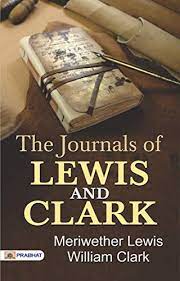
The Journals Of Lewis and Clark by Nicholas Biddle

The Forever Dog by Rodney Habib and Dr.Karen Shaw Becker

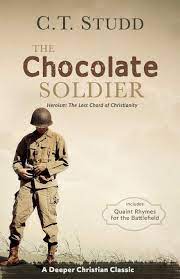
The Chocolate Soldier by CT Studd

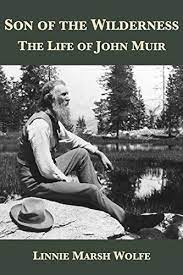
Son Of The Wilderness by Linnie Marsh Wolfe

When Jesus Stole My Bread by Paul Durbin

Landscapes Of The Sacred by Belden Lane

Billionaire Wilderness by Justin Farrell

Necessary Endings by Dr. Henry Cloud

Bushcraft 101 by Dave Canfield

Didn’t See It Coming by Carey Nieuwhof

Drawn by Jeremy Collins

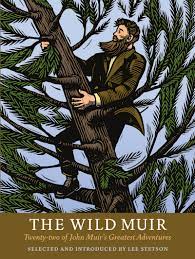
The Wild Muir

Reforesting You Faith by Matthew Sleeth

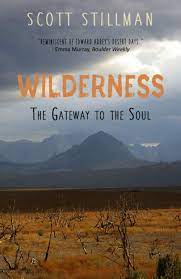
Wilderness The Gateway To The Soul by Scott Stillman

The Emotionally Healthy Leader by Peter Scazzero

Dream Big by Bob Goff

David Crockett by David Crockett

Christian Outdoor Leadership by Ashley Denton (Re- read)

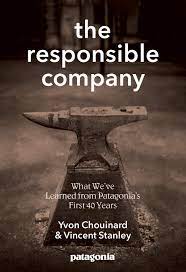
The Responsible Company by Yvon Chouinard

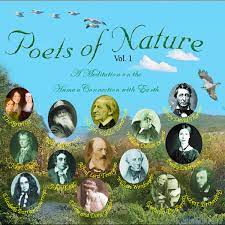
Poets Of Nature

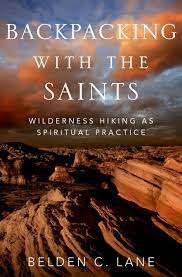
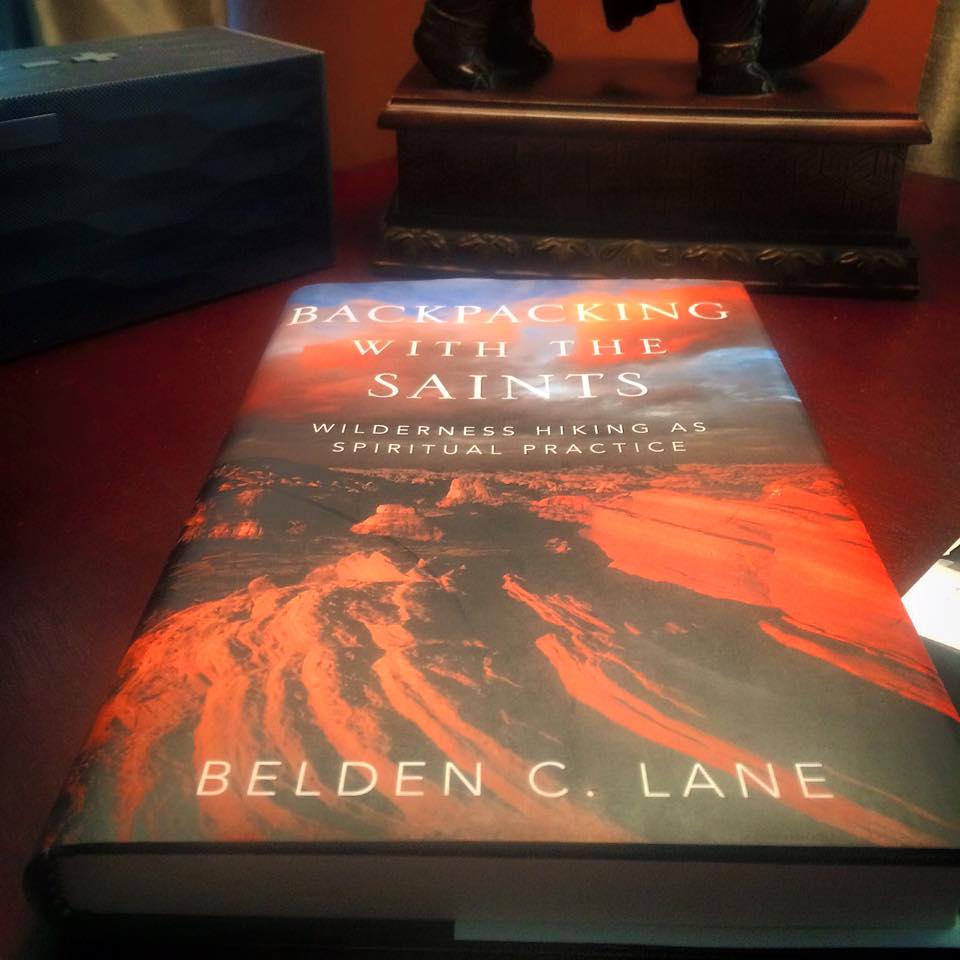
Backpacking With The Saints by Belden Lane

(a favorite and third time of reading this one.)

While the Apostle Paul was in lock down he had a desire to read in the warmth of his cloak.

bring the cloak that I left with Carpus at Troas, and my scrolls, especially the parchments.

– 2 Timothy 4:13

I am really looking forward to hiking with the friends on my book self this next year,

Steve

Standard
Books I'm Reading, Discovery Church, Discovery Prescott, leadership, Ministry

Seven Week Speaking Sabbatical at 60

“Every leader functions on two stages–the front stage and the back stage. The front stage is the public world of leadership. The back stage is the private world of the leader. There are many resources to help you succeed on the front stage. But who is talking to you about you and your backstage life?

  • prioritize matters of the soul
  • develop healthy spiritual practices
  • address problems that lead to burnout
  • create a healthy rhythm in your life
  • craft a healthy leadership culture
  • develop better systems in your church
  • move toward an unhurried life”

From the book Replenish by Lance Witt


At the age of 60 I had a personal goal to take a six week sabbatical from my ministry responsibilities at Discovery for the above mentioned desire.

However, real life would not allow that to take place.

Then, an idea of a partial sabbatical took shape and here is how it worked.

Discovery church here in Prescott has developed and been given some amazingly gifted and talented people.

Seven of them responded to my request to speak on Sundays and each brought such a rich and diversified message.

Something besides giving me the much needed break came  out of this as well.

Over the seven weeks I noticed something I have never that experienced.

Each speaker showed our church what our actual theology was and that was powerful to witness.

Here are a few quotes and statements from the past seven weeks.

Week 1 with Keith Dionise 

keith 1


“Jesus is the continuation of the story of God.”

“We need the Gospel to transform the heart, to grow with our relationship with God.”

“Jesus is coming back…..Without this truth rooted in our heart we can be discouraged.”

“In our everyday practical life we are living one of four ways: our hearts are hardened to the word of God, we recognize the word of God but do not accept it, we accept the word of God but not the reconciliation, & we accept the reconciliation of God.”

“Without having a foundation of faith, we can become a skewed in our beliefs.”

“God doesn’t want us to have a piece of him, he did not sacrifice his son for this, to deny him is to deny the work he has done for us.”

“We are not here to reinvent the gospel … we are here to let the gospel will reinvent us.”

Keith Dionise

Listen to the sermon here:

https://podpoint.com/episode/embed/96855

Week 2 with Helen Jackson

helen 1


“As mother’s we are not given a manual. Our manual for life & reference is the word of God.”

“The Bible gives us instruction for birthing, marriage, family & anything else we may encounter in our lives.”

“We can say that we love God, but if we don’t read the Bible, how do we know how to love him?”

“We live with God & he lives with us, he is a personal God.”

“In our times of trial & trouble we can sometimes question God’s direction. The Bible can help answer our questions, & define God’s character.”

“We eat everyday, food is our body’s fuel. The Bible is no different, it is the food for our spiritual body. If you don’t fast for your physical body, why are you fasting your spiritual body?”

“Sometimes the message we feast on can be undesirable, & other times it can be pleasant, but remember no matter the message it feeds our spiritual being for the better.”

“To glorify God is to bless God.”

“We can glorify God by our character & our actions.”

“God did not create us for him to be our pleasure, he created us for HIS pleasure.”

“If you want to live for God & have a relationship with him, you cannot live without his word, the Bible.”

“It doesn’t matter where you are in your life, God can use you.”

“In today’s world, people are feeling beaten up, all they want is hope. God IS hope, he is faithful, present, giving, generous, & good. He will give direction, just read it.”

Listen to the message here.

https://podpoint.com/episode/embed/97158

Week 3 with Maureen Simpson

maureen 1


“Never pass up an opportunity to break bread with someone who you don’t know. A new relationship & possibility to share the story of Christ may arrive from that occasion.”

“Live with intentionality with the people around you everyday. You do not need to be blood or have any other connection to any one person in order to serve selflessly.”

“Do not take for granted your availability to serve, worship and live as you do in America, because not everyone has that opportunity to do so.”

“The relationship of Christianity isn’t meant to be just for us, but to be given away & shared with others.”

This message is not available online.

Week 4 with James Dufour

james 1

james 2

” I have not even read the entire bible and yet I have been ask to preach it.”

“Ephesians 6 tells us to “stand” three times.”

“I’m so excited for the next best book in the bible.”

“The belt of truth holds us together.”

“All of us are fighting a battle.”

“Our righteousness is found in Jesus.”


Week 5 with Jason Dyer

jason 1

“If we are only trying to please people, then we are not servants of God.”

“Deep down we all seek validation & approval.”

“As Christians we share because of our love for others. Regardless of what others may think of us, we must never miss an opportunity to share God.”

“Understand that the approval of “they” & “them”, doesn’t matter.”

“Do NOT seek the approval of man, you will only lose your way, because at the end of the day IT DOES NOT MATTER.”

“As a society we have been conditioned to a culture of “SELFIES”. Do not chase after the approval of man.”

“We are not called to donate & give for the acknowledgment & pride, when we give, give without saying.”

“A lot of us are caught up in seeking the approval of others & ourselves, that we are missing the real reason that we are here.”

“If you are struggling with the circumstances of your life & questioning your approval from God, remember, he GAVE up his ONLY son because GOD LOVES US.”

“God doesn’t only just love us, he cherishes us, we are valued by him.”

“No matter where we are at or what we’ve done, GOD loves us, because Jesus died for US.”

“Understand that God isn’t going to love a FUTURE version of yourself more than he loves you right NOW. ”

Listen to the message here:

https://podpoint.com/episode/embed/98635


Week 6 with Nolan Howell

nolan 1


“What is Biblical meditation: Finding an opportunity to have a time of quiet to focus on God.”

“Every time God gives us something good, the world finds a way to pervert it.”

“With Biblical meditation we strive to fill our minds’ with positive thoughts & strengthen against the attacks of the enemy.”

“When we meditate on God’s word, he is with us.”

“Meditating on God’s word renews our souls. It allows us to discover God’s will for us.”

“Meditation is not easy, it takes practice. All too often when we try to focus on God, the distractions of life can come rushing in.”

“Do not be intimidated by Biblical meditation, if you’re not sure how to begin, start by focusing on a specific scripture or think about all of the gifts that God has given you, & thank him for those gifts.”

“Remember to focus on what’s next, Jesus.”

“Be honest with yourself, we may look like we are put together, but we’re not. The reality is we’re a mess. We need his help, but we may not know what to say. Guard your mind & thoughts & invite God in, to meditate on his word.”

Listen to the message here:

https://podpoint.com/episode/embed/99024


Week 7 with Boniface Musyoka Nyamu

DSC07265

DSC07263

“God came down to rescue the people from the power of the Egyptians, & to bring them up from that land to a land that is good & spacious, to a land flowing with milk & honey to the place of the Canaanites, the Hittites, the Amorites, the Perizzites, the Hivites, the Jebusites…..(.& the websites)”

“At times we may know who we are, but along the way we can forget who we are. Remember though that God will always remember who we are.”

“A mirror is a tool that allows us to see ourselves. We have many different “mirrors” in our lives that let us see our selves.”

“The people in our lives can act as a mirror in the way that they can reflect onto ourselves what they themselves see in ourselves.”

“Our jobs can act as a mirror in reflecting our outward successes to those around us.”

“Our cultural influences such as social media can act as a mirror in the way that they reflect our thoughts & public personification of ourselves to others.”

“The hardest mirror for us to look into is our past which shows us our mistakes & regrets.”

“The most important mirror in our lives is the word of God. We are a reflection of him. Walk towards this mirror.”

“We have to trust in the word of God. We have to have faith to walk through the hardest parts of our lives & trust that God will not fail us, that the past is gone, & that he is working on us.”

“We put so much pressure on ourselves in the different “mirrors” that we choose to look into. Look into the word of God & see your true reflection. We are not perfect, but we will see ourselves freely when we look into God’s mirror.”

“God is the light, the light of our lives & our future.”

“Through the other “mirrors” we can get distorted views of our lives & believe the lies these false mirrors reflect to us.”

“Our distorted views that we reflect cause us to question our worth, value & purpose.”

“These distorted reflections can give us a false identity. We are not here by mistake, we belong here. Our true identity is because God wants us here, & that he LOVES us all so much.”

Thank you all who contributed to this seven week journey.

Pastor Steve

IMG_1036

Standard
Books I'm Reading

Christian Outdoor Leadership: Theology, Theory, and Practice:

41Xt9c73OFL

Dr. Ashley Denton’s book on Christian outdoor leadership is the first of its kind.

Christian Outdoor Leadership: Theology, Theory, and Practice offers a relevant and innovative approach to leadership development, evangelism, discipleship, and spiritual formation through outdoor adventure. People today are eager for more experiential approaches to learning. This book re-asserts
Jesus’ experiential discipleship strategy by showing how to incorporate outdoor adventure into ministry the way he did. Few books on evangelism or discipleship probe the outdoor dimension of Jesus’ apprenticeship methods, and this book fills that gap.

This book builds on Dr. Robert Coleman’s classic Master Plan of Evangelism by addressing an element of Jesus’ apprenticeship strategy that has been given too little attention: The outdoor setting and timing were often the crucial elements of his teaching that fueled radical change of heart. Jesus often coupled his teaching with adventurous outdoor experiences to facilitate experiential learning. This is exactly what many people are hungry for today. Let Christian Outdoor Leadership: Theology, Theory, and Practice introduce you to a new way of making disciples that is profoundly anchored in Jesus’ ancient style of apprenticeship, utilizing experiential learning and outdoor adventure as a catalyst for transformation.

Standard
Books I'm Reading, outdoors

BACKPACKING WITH THE SAINTS

12644994_10208750503180371_1286203630634245082_n

Diving into this tonight at the suggestion of a friend.

The only problem with me reading this book is now I know I will need to do this.

Here is the review on the Jacket cover.

“Carrying only basic camping equipment and a collection of the world’s great spiritual writings, Belden C. Lane embarks on solitary spiritual treks through the Ozarks and across the American Southwest. For companions, he has only such teachers as Rumi, John of the Cross, Hildegard of Bingen, Dag Hammarskjöld, and Thomas Merton, and as he walks, he engages their writings with the natural wonders he encounters–Bell Mountain Wilderness with Søren Kierkegaard, Moonshine Hollow with Thich Nhat Hanh–demonstrating how being alone in the wild opens a rare view onto one’s interior landscape, and how the saints’ writings reveal the divine in nature.

The discipline of backpacking, Lane shows, is a metaphor for a spiritual journey. Just as the wilderness offered revelations to the early Desert Christians, backpacking hones crucial spiritual skills: paying attention, traveling light, practicing silence, and exercising wonder. Lane engages the practice not only with a wide range of spiritual writings–Celtic, Catholic, Protestant, Buddhist, Hindu, and Sufi Muslim–but with the fascination of other lovers of the backcountry, from John Muir and Ed Abbey to Bill Plotkin and Cheryl Strayed. In this intimate and down-to-earth narrative, backpacking is shown to be a spiritual practice that allows the discovery of God amidst the beauty and unexpected terrors of nature. Adoration, Lane suggests, is the most appropriate human response to what we cannot explain, but have nonetheless learned to love.

An enchanting narrative for Christians of all denominations, Backpacking with the Saints is an inspiring exploration of how solitude, simplicity, and mindfulness are illuminated and encouraged by the discipline of backcountry wandering, and of how the wilderness itself becomes a way of knowing-an ecology of the soul.”

Now to make plans of my own.

My saints will be:

Frank Boreham, John Muir, Ed Abby, Henry David Thoreau, a little Leonard Sweet  and some good maps.

Thanks Eric N for the tip on this one.

“there are those who can live without wild things, and some who cannot.” – Aldo Leopold- A Sand County Almanac

steve

Steve

Standard